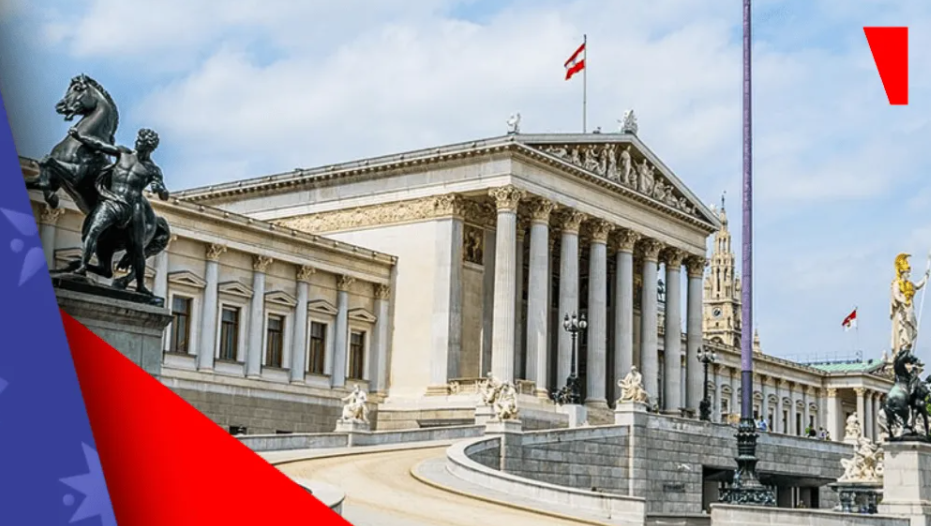
Austria stands on the brink of a regulatory shift of historic scale. After years of political stalemate and slow-moving legislative debate, a new law aimed at regulating the online gambling market is finally taking shape. The draft proposal is expected to reach the Council of Ministers shortly, before proceeding through Parliament and the European Commission under standard harmonisation procedures.
If the expected timeline holds, the law should come into force between June and July 2026. This could position Austria among the most modern and structured regulatory frameworks in Europe, replacing an outdated system that is strict on paper yet ineffective in practice.
At present, Austria operates under a single licence model, with Österreichische Lotterien – via its platform win2day – standing as the sole official operator allowed to provide online gambling services. Yet the practical reality looks very different. Despite the legal monopoly, the Austrian market is already widely accessed by offshore operators holding European licences, most prominently those registered in Malta and Gibraltar.
These platforms currently operate without domestic authorisation, filling the regulatory gap and offering gambling services to Austrian consumers with little oversight. Some of these companies pay taxes within the EU, while others remain entirely outside Austria’s fiscal system.
As a result, a significant share of gambling expenditure flows through channels that cannot be monitored for compliance, player protection or responsible gambling standards. This growing disparity between law and reality has increased pressure on legislators to intervene decisively.
The upcoming law seeks to align Austria with established regulatory standards seen in other European jurisdictions. At its core sits one principle: player protection. Both the Austrian People’s Party (ÖVP) and the Social Democratic Party (SPÖ) have expressed support for a framework inspired by Germany’s model, where a centralised self-exclusion system prevents at-risk players from accessing casinos and online platforms.
Applying a similar structure in Austria would introduce a unified safeguard covering all licensed operators, significantly strengthening prevention and harm-minimisation efforts.
The reform also aims to curb illegal activity through dedicated enforcement measures. One option under review is the blocking of IP addresses associated with unlicensed gambling websites, although this method can be easily bypassed through VPN services. For this reason, policymakers are prioritising payment blocking – including the creation of banking blacklists to prevent financial transactions from reaching illegal operators. While more complex to implement, this approach is considered far more effective and could drastically reduce access to non-compliant platforms.
A central decision lies ahead: whether Austria will move from a strict monopoly to a multi-licence system. The structure of the new market remains open – policymakers may choose a limited number of licences allocated under strict requirements, or a broader liberalised system with harmonised compliance standards. Both models carry benefits and risks. Liberalisation could stimulate investment, attract well-established international brands and generate increased fiscal revenue. However, a market opened too widely could make supervision more difficult and dilute responsible gambling safeguards.
Industry observers generally believe that a regulated multi-licence framework would channel players more effectively towards legal operators. Conversely, a regime that is overly restrictive or financially burdensome could push consumers towards the black market, undermining the reform’s very purpose. The long-term balance will depend on how successfully Austria blends competition, protection and regulatory efficiency.
Once introduced, the bill will enter a multi-stage approval process. First, it will be reviewed by the parliamentary finance and budget committees, followed by formal adoption at the Council of Ministers. It will then be notified to the European Commission, triggering a three-month standstill period during which Brussels may request amendments. If no major concerns are raised, the draft will return to the Austrian Parliament for a final vote.
Although various procedural hurdles could alter the pace – including political shifts, industry lobbying or technical challenges – the cross-party consensus supporting regulatory action suggests that progress may be more rapid than in previous years.
The upcoming reform represents a decisive moment for Austria’s online gambling landscape. On one side lies the opportunity to build a transparent, competitive and fiscally accountable market with heightened consumer protection. On the other stands the risk of enforcement obstacles, banking-level cooperation challenges and the possibility that excessive regulation might unintentionally strengthen illegal play.
Austria’s position in the European regulatory arena will likely depend on how effectively the final law balances control with accessibility. Should the reform succeed, it could restore trust across the market, reduce revenue leakage abroad and elevate Austria to the ranks of modern online gambling jurisdictions.
The summer of 2026 may prove to be a turning point. If the legislation progresses as expected, Austria could shift from a fragmented and loosely governed online sector to a supervisory framework that is advanced, enforceable and aligned with European standards. A transformation long awaited – and now finally within reach.
This article was first published in Italian on 4 December 2025.
#Austria #iGamingReform #GamblingRegulation #EUCompliance #PlayerProtection #MarketLiberalisation

Welcome to Gambling Consulting Authority (GCA) - Your Strategic Partner in Gambling Industry Advancement