Vietnam is seeking to strengthen its appeal as a regional gaming and tourism hub after Sun Group signed a partnership with Singapore-based Changi Airports International (CAI) to overhaul operations at Phu Quoc International Airport.
The agreement is centred on transforming the airport into what developers describe as an “airport destination” — a model that blends transport infrastructure with retail, entertainment, and cultural experiences. While such concepts are well established in Singapore, this would mark a first for Vietnam’s aviation sector.
CAI, part of the Changi Airport Group, will initially provide design advisory support and develop a Concept of Operations, outlining how the airport will function in practice. It is expected to assume full operational management at a later stage, bringing its experience from one of the world’s most highly regarded airport systems.
Phu Quoc, an island off Vietnam’s southwest coast, has been promoted as a high-end tourism destination. It is in Kien Giang province and is home to the Corona Resort & Casino, one of the few legal casinos in the country. Along with the Grand Ho Tram complex, it is one of the only places where gambling is allowed under strict rules.
Vietnam has long restricted gambling, allowing it only in small pilot programs. Phu Quoc was made a special economic zone so authorities could test a regulated model, with limited access for local players who qualify. This has given the island a reputation for legal gaming, which is rare in Vietnam.
The casino itself is positioned as a large-scale integrated resort, combining gaming with hospitality and leisure. Its beachside setting, visa-friendly entry policies, and growing luxury offering have attracted visitors from across Asia, including Singapore, Thailand, and South Korea, many of whom combine tourism with gaming.
The airport partnership appears designed to support this trajectory. Expanding international connectivity is a central aim, with Sun Group’s own airline, Sun PhuQuoc Airways, set to launch its first international route linking the island to Taipei. Improved access is expected to play a key role in drawing higher-spending visitors.
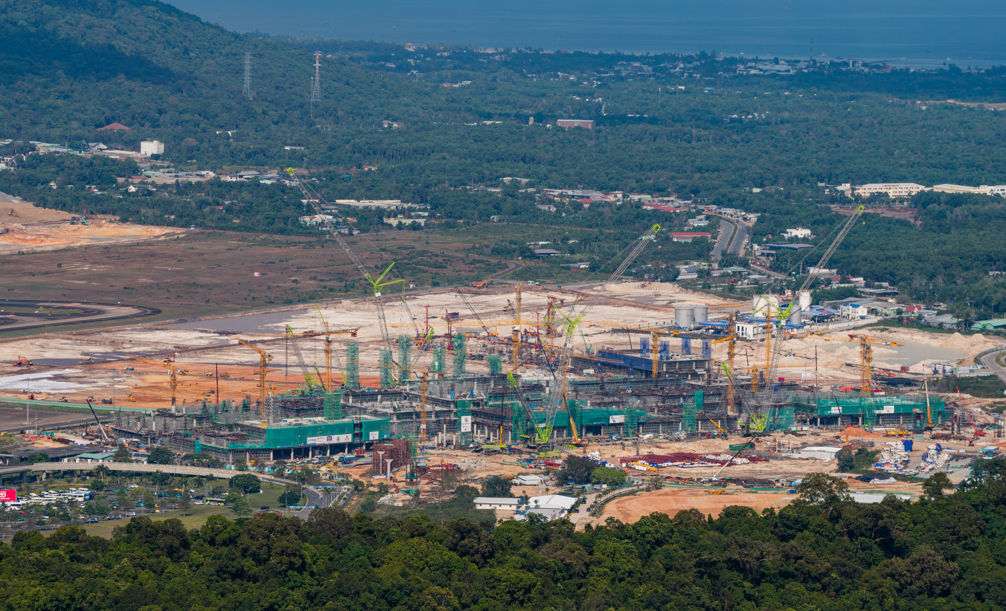
Construction site of Phu Quoc Airport Terminal T2 (Source: sungroup.com)
Besides aviation, there are also plans to boost non-aeronautical revenue. Plans include more retail space, new food and beverage outlets, and expanded duty-free shops. These areas are being planned in a way for modern airports. The goal is to make the airport a place where passengers want to spend time, not just pass through.
Plans also include upgrading the airport’s infrastructure by building a second runway, a new Terminal 2, a VIP terminal, and expanding the apron area. The airport expects to handle 24 million passengers each year, aiming to reach up to 50 million in the future. This would make Phu Quoc one of the region’s major aviation hubs.
The timeline is partly driven by the Asia-Pacific Economic Cooperation summit, scheduled to be held on the island in 2027. Authorities are accelerating development to ensure the airport can handle the expected surge in traffic and international attention.
For Sun Group, the project forms part of a wider strategy to link aviation, tourism and gaming into a single ecosystem. The company is also developing another casino resort in Van Don, signalling wider ambitions within the sector.
If successful, the Phu Quoc model could offer a blueprint for similar developments elsewhere in Vietnam, when policymakers weigh the economic potential of a more formal approach to tourism and regulated gambling.
#Vietnam #GamingTourism #IntegratedResorts #AsiaGaming #CasinoIndustry #TourismDevelopment #MarketExpansion

Welcome to Gambling Consulting Authority (GCA) - Your Strategic Partner in Gambling Industry Advancement